Views: 0 Author: Site Editor Publish Time: 2026-03-09 Origin: Site
Production managers who work with foam materials quickly realize that cutting EPS is not about producing a single product. A single EPS Cutting Machine can create dozens of sellable products across multiple industries, from decorative architectural elements to protective packaging and creative structures. Expanded polystyrene is lightweight, easy to shape, and adaptable to many design requirements. With the right cutting equipment, manufacturers can turn raw foam blocks into a wide range of finished products that meet different commercial needs.
EPS foam cutting technology works by shaping foam blocks or sheets into precise forms using heated wires or CNC motion systems. This process allows manufacturers to transform simple foam material into highly functional components used in construction, logistics, design, and creative fabrication. Understanding what can actually be produced with this equipment helps businesses identify where new opportunities exist and how foam processing can support new product lines.
EPS foam is used in many sectors, but most real-world applications fall into three broad categories. These categories help manufacturers quickly understand where EPS cutting technology creates commercial value.
One of the most widely recognized applications for EPS foam is decorative construction materials. Cornices, trims, columns, window frames, and façade decorations are frequently produced using EPS foam cutting technology.
These products are popular because they combine lightweight materials with complex shapes. Builders can install them easily without heavy lifting equipment, while architects can design intricate profiles that would be difficult or expensive to produce with traditional materials.
Foam decorative elements are often coated with plaster or protective layers after cutting, creating durable architectural details for exterior walls.
Packaging is another major application. Many electronics manufacturers and equipment suppliers rely on EPS foam inserts to protect products during transportation.
Custom-cut foam inserts absorb shocks and keep products stable during shipping. Because every product has different dimensions, packaging manufacturers frequently use cutting machines to produce inserts that match product shapes exactly.
Creative industries also depend heavily on EPS cutting technology. Advertising companies, exhibition designers, and stage designers often create large decorative letters, signs, and props using foam.
EPS foam is easy to cut and lightweight, which makes it suitable for temporary structures, exhibition displays, and creative installations. CNC cutting systems allow designers to turn digital designs into real foam structures quickly.
The construction industry has adopted EPS foam because it combines practical installation advantages with design flexibility.
Traditional decorative building materials such as stone or concrete require significant labor and transportation effort. EPS foam elements, by contrast, are extremely light.
Even large decorative profiles can be installed by small teams without heavy lifting equipment. This makes installation faster and reduces labor costs for construction projects.
Decorative cornices and trims require clean edges and symmetrical curves. When foam profiles are cut with accurate machines, the edges remain smooth and consistent.
Smooth profiles are especially important before applying protective coatings or plaster finishes. If the foam surface is uneven, additional manual sanding becomes necessary. High-precision cutting eliminates much of that extra work.
A typical order in this sector often involves producing the same decorative profile in multiple lengths. Contractors may order hundreds of identical pieces for a single building façade. Cutting machines make it possible to reproduce these shapes consistently across large production batches.
Another major application of EPS cutting technology is the production of insulation materials used in buildings.
Insulation manufacturers often begin with large EPS foam blocks produced during molding processes. These blocks must be sliced into boards with consistent thickness before they can be used in construction.
Cutting machines equipped with multiple wires can divide a single block into several insulation boards simultaneously. This approach dramatically increases production efficiency.
When insulation panels are cut precisely during manufacturing, construction crews spend less time trimming materials on site.
Consistent panel dimensions improve installation speed and reduce wasted foam. This not only saves material costs but also helps maintain cleaner job sites.
Many products require customized protective packaging. Electronics, medical equipment, household appliances, and industrial instruments often rely on foam inserts that match product shapes exactly.
Packaging designers typically begin by measuring the dimensions of the product that requires protection. These measurements are then converted into a foam insert design that holds the product firmly in place.
Using cutting machines, manufacturers can produce inserts with identical shapes across large batches. This repeatability ensures every package provides the same level of protection.
Packaging manufacturers often serve customers with very different production volumes.
Some companies require small batches of customized packaging for limited product runs. Others require thousands of identical foam inserts for mass-produced electronics.
Automated cutting systems allow manufacturers to handle both scenarios efficiently. They can quickly switch between different designs while maintaining high production accuracy.
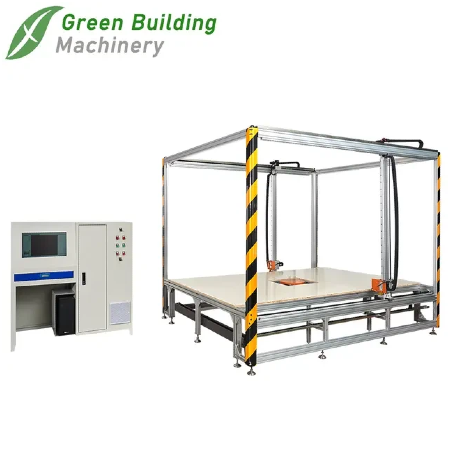
Foam processing equipment also plays an important role in creative design industries.
Advertising displays, exhibition decorations, theme park installations, and event props frequently begin as EPS foam blocks.
Contour cutting systems allow operators to produce letters, logos, and decorative shapes. These machines move a heated wire along programmed paths, creating accurate outlines.
Advertising companies frequently use this technique to produce large foam letters for store displays or exhibition stands.
More advanced CNC machines can create complex three-dimensional forms. Sculptures, stage props, architectural prototypes, and themed decorations often rely on this technology.
Three-dimensional cutting allows designers to turn digital models into physical objects quickly. Once cut, the foam surface can be sanded or coated to achieve the desired appearance.
Foam can sometimes be shaped using manual tools, mechanical saws, or molding techniques. However, cutting technology becomes the preferred solution under several conditions.
Manufacturers producing identical shapes across multiple batches need reliable cutting systems. Machines ensure that every product matches the original design.
Manual cutting methods require skilled operators and significant time. Automated cutting equipment speeds up production and allows businesses to scale output.
Products such as decorative cornices or packaging inserts often require multiple foam pieces to fit together precisely. Accurate cutting ensures joints align correctly, reducing assembly problems.
Different industries follow slightly different processing steps after cutting foam. The table below shows how various products are typically manufactured and what steps follow the cutting process.
End Product | Typical Buyer | Cutting Type Needed | Next Step After Cutting | Quality Risk to Watch |
Architectural cornices | Construction contractors | 2D contour cutting | Plaster coating and finishing | Edge distortion |
Insulation panels | Building material suppliers | Multi-wire sheet cutting | Packaging and transport | Thickness variation |
Packaging inserts | Electronics manufacturers | 2D contour cutting | Assembly with product packaging | Shape mismatch |
Foam letters and signage | Advertising studios | CNC contour cutting | Painting or surface coating | Surface roughness |
Sculptures and models | Creative design studios | 3D CNC cutting | Sanding and finishing | Dimensional accuracy |
Understanding these production chains helps businesses identify where foam cutting equipment fits into their workflow.
The development of foam processing technology has made EPS products more accessible across different industries. Modern equipment integrates cutting, recycling, and molding systems to improve production efficiency while reducing waste.
Green building Machinery focuses on developing equipment that supports the entire EPS production cycle. The company has created a range of machines including EPS melting machines, pelletizers, recycling systems, and advanced cutting equipment such as 2D and 3D CNC cutting machines.
These systems allow manufacturers to convert foam blocks into finished products while also managing leftover material more efficiently. Recycling systems can process scrap foam and convert it back into usable material, contributing to more sustainable foam production.
Beyond machinery manufacturing, the company also has practical experience in foam carving and cornice molding production. With years of experience in exterior wall decorative products and specialized plaster formulas, the production lines have achieved high standards of quality.
Products manufactured using these technologies are exported to markets in Europe, North America, Australia, and other regions. This international presence reflects the growing demand for efficient foam processing equipment in construction and design industries.
A modern EPS Cutting Machine is not limited to one type of product. It enables manufacturers to create insulation panels, packaging inserts, architectural decorations, advertising displays, sculptures, and many other foam-based products. What businesses ultimately produce depends on their market focus and product strategy. When production requires consistent shapes, efficient material usage, and scalable output, advanced foam cutting equipment becomes an essential part of the workflow. Companies that invest in reliable foam cutting systems gain the flexibility to expand product lines and meet the growing demand for customized foam solutions.
If your production involves EPS foam and you are exploring new product possibilities, our team is ready to help. Green building Machinery provides advanced EPS cutting equipment including CNC cutting machines, flat cutting machines, and integrated foam processing systems. Contact us today to learn how our solutions can support your foam production projects and help you expand your manufacturing capabilities.
EPS cutting machines are widely used in construction, packaging manufacturing, insulation production, and creative design industries. These machines allow companies to produce decorative elements, protective packaging inserts, and foam structures with consistent accuracy.
Yes. CNC cutting systems can follow programmed designs to produce customized foam shapes such as letters, decorative profiles, and complex models. This flexibility makes them suitable for both industrial and creative applications.
EPS foam provides excellent shock absorption and is lightweight. Custom-cut foam inserts help protect fragile products during transportation by holding them securely inside packaging.
Yes. Modern EPS cutting equipment can handle both small batches and high-volume production runs. Automated systems ensure that each foam component maintains consistent dimensions and quality across large orders.