Views: 0 Author: Site Editor Publish Time: 2026-03-06 Origin: Site
Hand tools can shape foam for simple projects, but the moment a customer requests consistent profiles or repeated designs, manual methods quickly reach their limits. This is where an EPS Cutting Machine becomes essential. Instead of relying on manual trimming or inconsistent templates, manufacturers can produce foam components with reliable accuracy and smooth edges. For companies that work with expanded polystyrene, the EPS Cutting Machine is not just a piece of equipment—it is the foundation for stable production, repeatable quality, and scalable manufacturing.
Before going deeper, it helps to clarify the material involved. EPS stands for expanded polystyrene, a lightweight foam created from polystyrene beads that expand under heat and pressure. It is widely used in construction insulation, packaging protection, decorative architecture, and many industrial applications. While EPS shares similarities with XPS foam, EPS typically consists of visible beads fused together, which makes it easier to cut and shape using thermal methods. In the next few minutes, readers will understand what an EPS Cutting Machine is, how it works in real production environments, and why businesses across multiple industries rely on it to improve efficiency and product consistency.
Understanding the material itself helps explain why specialized equipment is needed. EPS foam may appear soft and easy to shape, but its internal structure affects how it should be cut.
EPS is formed by expanding thousands of small polystyrene beads. During manufacturing, these beads fuse together to create a lightweight but rigid block of foam. Unlike solid plastic sheets or wooden boards, EPS contains air pockets between beads. When mechanical blades are used, the foam can tear, crumble, or leave rough edges.
Thermal cutting technology avoids these problems. A heated wire glides through the foam, gently melting the material along a precise path rather than tearing it apart. This process allows the foam to be shaped smoothly without damaging its structure.
In many industries, EPS foam is not the final surface. It often receives additional treatments such as coatings, plaster layers, protective resins, or adhesives. Clean edges and smooth surfaces are therefore extremely important.
If foam is cut unevenly, the following problems can occur:
Coatings may not adhere evenly
Decorative profiles may appear distorted
Adhesive bonding between foam sections may weaken
Finished products may require time-consuming manual correction
High-precision cutting eliminates these issues at the beginning of the production process.
An EPS Cutting Machine is specialized equipment designed to shape blocks or sheets of expanded polystyrene into precise forms and dimensions. Instead of manual cutting, the machine controls heat and movement to achieve repeatable, clean results across large batches of foam products.
At its core, the machine combines a heated cutting element with a controlled motion system. Together they guide the wire through foam blocks or panels according to a defined path.
EPS cutting machines are typically based on several main methods.
Hot wire cutting is the most widely used technique. A thin wire is heated electrically and passes through foam to melt the material along the cutting line.
Multi-wire cutting systems use several parallel wires to slice large foam blocks into multiple sheets at the same time. This method is common in insulation board production.
CNC contour cutting machines use computer-controlled motion to create curves, decorative profiles, and complex shapes.
Each approach serves different production needs, from simple flat panels to detailed architectural elements.
Precision in foam manufacturing does not simply refer to size accuracy. It also includes consistency between batches and smoothness of surfaces.
A precise EPS cutting system ensures:
Identical profiles across long production runs
Symmetrical shapes for decorative components
Clean edges that reduce sanding or trimming
Reduced material waste during production
These advantages make automated foam cutting systems valuable for manufacturers aiming to deliver reliable product quality.
Businesses do not invest in equipment purely for technical reasons. They invest because machines improve production efficiency and product reliability.
When cutting is done manually, production time varies depending on operator skill and complexity of the shape. That uncertainty makes it difficult to estimate delivery times.
With an automated cutting system, production speed becomes predictable. Manufacturers can calculate output more accurately, which helps them respond quickly to customer inquiries and maintain reliable delivery schedules.
Decorative foam elements often receive protective coatings or plaster layers. Smooth surfaces allow coatings to spread evenly and reduce the need for additional finishing steps.
Consistent cutting improves the final appearance of decorative elements such as architectural moldings and façade ornaments.
Waste material is one of the hidden costs of manual cutting. Uneven cuts, damaged foam sections, and incorrect measurements all lead to scrap.
A properly designed EPS cutting machine reduces these problems by maintaining stable cutting conditions. As a result, more foam blocks are converted into usable products instead of discarded pieces.
EPS foam is used in a wide variety of sectors. As a result, cutting machines serve many different production environments.
Protective packaging is one of the largest applications of EPS foam. Electronics, appliances, and fragile equipment often require custom foam inserts to prevent damage during transport.
Precision cutting ensures the foam fits the product exactly, providing reliable protection.
The construction industry increasingly uses EPS materials for insulation panels and decorative elements. Cornices, trims, and façade decorations are often carved from foam before receiving protective coatings.
Because these components must match across entire building surfaces, repeatable cutting is essential.
Foam cutting machines are also widely used in creative industries. Advertising displays, exhibition props, stage sets, and artistic sculptures frequently begin as EPS foam blocks that are shaped into complex forms.
These applications benefit greatly from CNC cutting technology, which can produce detailed shapes quickly.
For companies producing decorative moldings or architectural elements, consistency is crucial. Customers expect identical profiles from one batch to the next. Automated foam cutting equipment helps ensure every piece matches the original design.
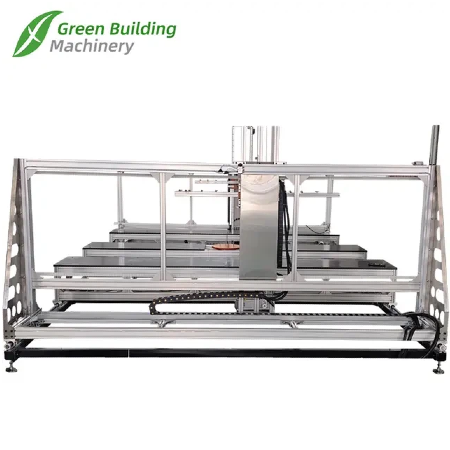
Not all EPS cutting machines are the same. Different machine types are designed for different manufacturing goals.
Flat cutting systems use multiple parallel wires to slice large foam blocks into uniform sheets. These machines are ideal for insulation board production or packaging materials.
Contour cutting machines move a heated wire along programmed paths to create decorative profiles, shapes, and curved designs.
These machines are commonly used for architectural moldings, foam letters, and packaging inserts.
More advanced systems use multi-axis motion to produce complex three-dimensional shapes. These machines are capable of carving foam sculptures, molds, and intricate designs.
They are especially useful in industries that require customized forms or prototype models.
When companies invest in foam cutting equipment, several technical aspects determine long-term performance.
Consistent heat levels ensure smooth cutting. If the wire temperature fluctuates, foam edges may appear rough or uneven. Stable wire tension also prevents vibration and ensures straight cutting paths.
Precise motion systems ensure the cutting wire follows the correct path. Modern control systems allow operators to adjust cutting parameters easily, improving efficiency and reducing training time.
Thermal cutting processes generate small amounts of vaporized foam. Proper ventilation helps maintain a clean working environment and ensures safe operation.
Reliable equipment integrates these considerations into the overall design.
Different production targets require different cutting methods. The following table shows how manufacturers typically align their product goals with specific machine types.
Output Product Type | Tolerance Expectation | Suggested Cutting Method | What Improves Yield | Best Fit Production Profile |
Insulation boards | Medium | Multi-wire sheet cutting | Stable wire spacing | Large insulation factories |
Packaging inserts | Medium to high | 2D contour cutting | CNC path control | Packaging manufacturers |
Decorative moldings | High | 2D CNC cutting | Stable wire tension | Architectural suppliers |
Sculptures and models | High | 3D CNC cutting | Multi-axis motion control | Creative studios and display makers |
This comparison illustrates why many foam processing businesses rely on specialized cutting equipment rather than manual methods.
Green building Machinery focuses on developing equipment for EPS foam cutting, recycling, and molding processes. The company’s production lines include melting machines, pelletizers, crushing and recycling systems, as well as advanced cutting equipment such as 2D and 3D CNC foam cutting machines.
These technologies are designed to support a more efficient and environmentally responsible foam processing industry. By combining cutting precision with recycling capabilities, the equipment helps manufacturers reduce waste while improving production output.
Years of experience in foam carving and cornice molding production have also allowed the company to refine equipment designs based on real manufacturing needs. This practical knowledge ensures machines perform reliably in daily production environments.
An EPS Cutting Machine transforms foam shaping from manual craftsmanship into repeatable industrial production. By controlling heat and motion precisely, manufacturers can produce consistent foam components, reduce material waste, and improve production speed. Industries ranging from construction to packaging rely on these machines because they make foam processing predictable and scalable. As customer demand grows for accurate shapes and decorative foam elements, advanced foam cutting equipment continues to play a crucial role in modern manufacturing. For companies looking to upgrade their production capabilities, a high-quality EPS foam cutting system provides the foundation for reliable output and long-term business growth.
If your business works with EPS foam and requires precise cutting solutions, our team can help you explore suitable equipment configurations. Green building Machinery offers a wide range of foam processing systems including CNC cutting machines, flat wire cutting equipment, and EPS molding technologies. Contact us today to learn how our EPS cutting solutions can support your production goals.
An EPS Cutting Machine is primarily designed for expanded polystyrene foam. Some machines can also process similar lightweight foams used in insulation, packaging, and decorative production.
Yes. EPS foam is widely used to produce cornices, trims, columns, and façade decorations. Precision cutting machines help ensure the profiles remain consistent across large construction projects.
Hot wire cutting melts the foam gently rather than tearing it. This creates smoother edges, improves accuracy, and reduces material damage during the cutting process.
Advanced CNC foam cutting machines can produce detailed curves, profiles, and three-dimensional forms. These capabilities make them useful for decorative manufacturing, packaging design, and creative industries.