Views: 0 Author: Site Editor Publish Time: 2026-02-24 Origin: Site
Choosing the wrong EPS Cornice Moulding manufacturer risks delays.
Quality and consistency are critical for building projects.
In this article, you will learn key factors to evaluate reliable suppliers.
EPS cornice mouldings serve both structural and aesthetic functions in building design. They provide a seamless transition between walls and ceilings, covering gaps or imperfections while enhancing architectural appeal. In residential projects, these mouldings can define room proportions, add visual interest, and complement interior or exterior design themes. In commercial façades, they help unify design elements, contributing to a professional and cohesive appearance. The lightweight nature of EPS allows for easy handling and installation, making it suitable for large surfaces without adding structural load.
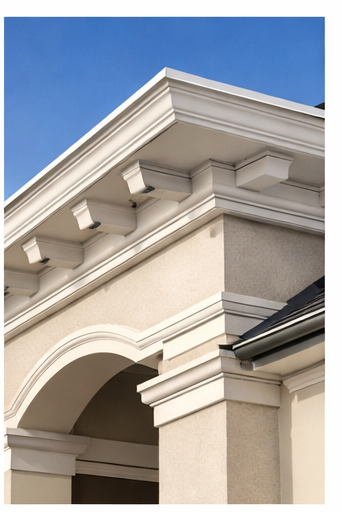
Applications of EPS cornice mouldings extend beyond simple trimming. Common uses include:
● Framing windows, doors, and entryways for decorative emphasis
● Highlighting rooflines and eaves in both homes and commercial buildings
● Creating ornamental features such as columns, arches, or keystones
● Integrating with exterior insulation systems for combined functional and aesthetic value
By performing these roles, EPS cornice mouldings maintain both durability and elegance while enabling architects and builders to achieve complex decorative effects efficiently.
Selecting a manufacturer rather than a purely trading-focused supplier is critical for consistent product quality. In-house production ensures that the same team oversees material selection, shaping, and finishing processes. This control reduces variations in density, surface smoothness, and dimensional accuracy across multiple orders. Trading-focused suppliers often rely on third-party manufacturers, which can introduce inconsistencies and complicate accountability.
Key advantages of working with manufacturing-focused suppliers include:
● Direct oversight of production standards and quality assurance
● Faster response to custom requests or design modifications
● Reduced risk of damage or misalignment due to transportation between multiple suppliers
Ensuring that the manufacturer maintains control over the entire EPS cornice moulding process is essential for achieving consistent, reliable, and high-quality outcomes in both residential and commercial applications.
The breadth of a manufacturer’s operations often reflects its technical and operational capabilities. A company capable of producing both EPS machinery and finished mouldings demonstrates deeper expertise in materials, shaping technology, and quality control. Jinhua Green Building Industry & Trading Co., Ltd exemplifies this model by integrating EPS processing equipment with finished product production. This integration allows the manufacturer to monitor material performance from raw EPS beads to completed cornice mouldings.
Indicators of production capability include:
● Range of product types offered, from standard profiles to decorative components
● Ability to handle multiple project scales, ensuring batch consistency
● Technical support and process knowledge that facilitate customization and precise execution
Evaluating the production scope provides insight into a manufacturer’s ability to consistently meet design specifications, deliver uniform quality, and support complex architectural requirements.
High-quality EPS materials are critical for producing durable and precise EPS Cornice Moulding. Material density affects rigidity, surface smoothness, and long-term stability. Manufacturers typically select EPS beads that meet fire-retardant standards and ensure consistent expansion during production. Proper material handling during pre-expansion and molding stages also prevents defects such as air pockets or uneven surfaces. Using consistent, high-grade EPS supports both structural integrity and ease of installation in residential and commercial projects.
Consistent shaping and cutting are essential for maintaining uniformity across multiple EPS Cornice Moulding pieces. Precision equipment, including CNC cutting systems, allows for accurate replication of complex profiles. Tolerances in dimensions must be carefully monitored to prevent misalignment during installation. Reliable production practices ensure that each piece matches design specifications, reducing waste and saving time during construction. Precision at this stage directly influences the aesthetic quality and fit of the mouldings on-site.
Effective quality control involves continuous monitoring throughout the manufacturing process. Raw materials are inspected for purity and density before molding, while in-process checks verify expansion, shaping, and surface finish. Finished EPS Cornice Moulding products are assessed for dimensional accuracy, consistency, and coating adhesion. Some manufacturers also document batch inspections to trace any deviations. Structured quality control ensures reliable outcomes, allowing builders and designers to trust that each component meets technical and visual expectations.
Compliance with fire safety and building regulations is a fundamental criterion for selecting a manufacturer. EPS materials should conform to regional fire resistance classifications and any additional architectural standards. Adhering to these standards minimizes risk during installation and use. Regulatory compliance also covers safe handling of raw materials and finished mouldings. Manufacturers demonstrating formal compliance offer confidence that their EPS Cornice Moulding is suitable for approved construction applications.
Maintaining uniformity across multiple orders is vital for large-scale or multi-phase projects. Batch consistency ensures that colour, texture, density, and profile dimensions remain constant. Repeatable processes reduce installation issues and support design continuity across entire façades. Manufacturers capable of consistent repeat production streamline project planning, allowing clients to schedule installations without concern for mismatched or defective pieces.
Environmental standards and safe handling practices are increasingly important in selecting a manufacturer. EPS materials should be processed and stored in ways that minimize environmental impact and adhere to local regulations. Workplace safety protocols during cutting, coating, and packaging protect staff and reduce operational risks. A manufacturer that integrates environmental and safety practices into daily operations demonstrates a commitment to responsible production of EPS Cornice Moulding.
The production of EPS Cornice Moulding begins with high-quality raw EPS beads. These beads are pre-expanded to a specific density to ensure uniformity and structural stability. Once pre-expanded, the material is shaped into blocks or profiles using molds that correspond to the desired cornice design. After molding, the pieces undergo finishing steps such as trimming, sanding, and optional surface treatment to achieve smooth edges and consistent dimensions. Each stage is closely monitored to maintain material integrity and overall product quality.
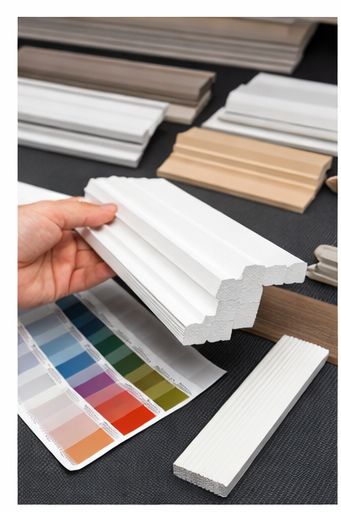
Key steps in the production process include:
● Pre-expansion of EPS beads for density control
● Molding into the required cornice shapes
● Trimming and shaping for precise dimensions
● Surface finishing and optional coating applications
Specialized equipment is essential for producing consistent EPS Cornice Moulding. CNC cutting systems and automated shaping machines allow manufacturers to replicate intricate profiles accurately. Equipment capability directly impacts the dimensional precision and surface quality of the finished mouldings. Advanced machinery can also handle larger or complex profiles while minimizing material waste. Properly maintained production lines ensure that each piece meets the technical specifications required for architectural applications.
Important considerations regarding equipment include:
● Accuracy and repeatability of CNC cutting
● Compatibility with various EPS densities and shapes
● Ability to maintain consistent surface finishes across multiple pieces
Reliable manufacturers must demonstrate the ability to meet project demands without compromising quality. Production capacity includes both the volume of mouldings produced per day and the ability to handle large orders while maintaining uniformity. Reliability also encompasses consistent lead times and adherence to quality standards across batches. Manufacturers capable of scalable production help builders and designers plan installations efficiently and ensure that all delivered cornices match design requirements.
Factors affecting capacity and reliability:
● Daily production throughput for standard and custom profiles
● Consistency of product quality across multiple batches
● Scheduling and workflow management to meet project timelines
Jinhua Green Building Industry & Trading Co., Ltd offers a diverse selection of EPS cornice mouldings designed for exterior architectural use. Their product range includes standard profiles suitable for common façade designs and complementary mouldings to enhance design continuity. These complementary products allow architects and builders to create seamless transitions between walls, ceilings, and decorative features. The variety ensures that both residential and commercial projects can achieve consistent visual appeal while maintaining functional integrity.
Key aspects of product variety:
● Standard cornice mouldings for typical building façades
● Matching trims and finishing elements to integrate with existing designs
● Flexibility to combine multiple moulding types in one project
The core product line from Jinhua Green Building Industry & Trading Co., Ltd includes essential EPS components that form the foundation of exterior decorative systems. This lineup comprises EPS Cornice Moulding, EPS Fence Trim, and EPS Eave Cornice. Each component serves a specific purpose: cornices provide horizontal transitions, fence trims accentuate perimeter designs, and eave cornices enhance roofline details. Together, these elements create a cohesive architectural language while ensuring material consistency and ease of installation.
Features of core components:
● EPS Cornice Moulding: defines wall-to-ceiling transitions
● EPS Fence Trim: decorative perimeter detailing for walls and fences
● EPS Eave Cornice: enhances roofline aesthetics and weather protection
In addition to core products, Jinhua Green Building Industry & Trading Co., Ltd provides specialized decorative elements that add architectural character. These include EPS Roman Column, EPS Door Arc, and EPS Key Stone, each designed to complement structural features. Roman columns introduce vertical accents and classical styling, door arcs enhance entryways with curved profiles, and keystones provide focal points in arch designs. Incorporating these decorative elements allows builders to achieve detailed, visually engaging façades while using lightweight, easy-to-install EPS materials.
Applications of decorative elements:
● EPS Roman Column: vertical architectural accents
● EPS Door Arc: ornamental entryway enhancements
● EPS Key Stone: focal points in arches and structural openings
EPS Cornice Moulding offers both standard profiles and custom solutions to meet diverse architectural needs. Standard profiles provide consistent shapes suitable for most residential and commercial façades. Custom solutions allow designers to tailor mouldings to unique project specifications, including size adjustments, complex patterns, or specialized decorative details. Manufacturers can produce these custom pieces while maintaining material quality and dimensional accuracy, ensuring that each component fits seamlessly within the overall design plan.
Key considerations for customization:
● Adjusting profile dimensions for ceiling height and façade proportions
● Creating unique ornamental patterns for special architectural features
● Ensuring consistent material density across custom designs
Accurate interpretation of architectural drawings is essential for producing precise EPS Cornice Moulding components. Manufacturers work from detailed project specifications or CAD files to translate design concepts into physical mouldings. Effective coordination with architects or contractors ensures that moulding dimensions, angles, and details align with the intended design. This collaboration minimizes installation errors and supports consistency across multiple components within a project.
Critical points in drawing coordination:
● Verifying dimensions and angles before production
● Translating 2D or 3D design files into accurate EPS profiles
● Maintaining communication with design teams to resolve discrepancies
EPS Cornice Moulding must integrate smoothly with other exterior architectural elements to maintain design continuity. Cornices, trims, columns, and arches are coordinated to create cohesive lines and balanced proportions. Proper integration ensures that decorative features complement structural elements without visual conflicts. Lightweight and adaptable EPS materials allow for precise alignment with walls, rooflines, and other façade details, supporting both aesthetic appeal and functional installation.
Integration strategies include:
● Aligning cornices with window and door frames
● Coordinating moulding patterns across multiple building façades
● Combining decorative elements such as columns, keystones, and eave mouldings for visual harmony
Predictable lead times are critical when sourcing EPS Cornice Moulding for construction projects. Reliable manufacturers provide clear production schedules that align with project timelines. Delays can disrupt installation sequences and increase labor costs. Planning lead times in advance helps architects and contractors coordinate multiple suppliers and ensures components arrive when needed. Transparency in scheduling allows for contingency planning if unexpected changes occur.
Key factors to consider:
● Standard production cycles and order processing time
● Communication on potential delays or adjustments
● Alignment with on-site installation schedules
EPS Cornice Moulding is lightweight but sensitive to damage during transport. Proper packaging ensures products arrive intact and ready for installation. Protective methods reduce breakage, dents, or deformation while maintaining the mouldings’ aesthetic and functional quality.
Packaging Method | Purpose | Notes |
Shrink-wrapping | Prevents movement during shipping | Suitable for stacked mouldings |
Cushioning materials | Absorbs shock and prevents dents | Foam sheets, bubble wrap |
Reinforced crates | Protects large or heavy components | Reduces risk of deformation or breakage |
Labeling & orientation | Guides safe handling on site | Indicates top/bottom and fragile areas |
Manufacturers with international project experience demonstrate the ability to manage logistics, documentation, and compliance requirements. Jinhua Green Building Industry & Trading Co., Ltd has delivered EPS Cornice Moulding to multiple countries, showing knowledge of international building codes and material standards. This experience ensures mouldings meet diverse architectural requirements and arrive on schedule, supporting both large-scale and multi-site projects.
Indicators of strong project experience:
● Successful delivery to multiple international markets
● Knowledge of cross-border regulations and shipping standards
● Ability to meet design and compliance requirements for various projects
Selecting a reliable EPS Cornice Moulding manufacturer ensures project quality.
Evaluating material, production, and delivery reduces coordination risks.
Jinhua Green Building Industry & Trading Co., Ltd provides technical expertise and consistent moulding solutions.
A: EPS Cornice Moulding provides lightweight, durable exterior and interior detailing, supporting consistent façade aesthetics and structural alignment in commercial buildings.
A: Assess material quality, production precision, quality control, delivery reliability, and experience with similar industrial projects.
A: Handling, packaging, and dimensional accuracy influence installation efficiency and reduce rework in large-scale construction projects.
A: Material density, production consistency, and maintenance requirements affect total lifecycle cost and replacement planning.
A: Its lightweight design and modular components streamline installation, reduce labor time, and maintain architectural consistency.