Views: 0 Author: Site Editor Publish Time: 2026-02-20 Origin: Site
Why does EPS Cornice Moulding shape modern façades today? Its lightweight form fits clean architectural lines.
Quality varies across exterior EPS decorative mouldings. Poor choices often cause long-term visual issues.
In this article, you will learn how material, design, and application guide better decisions.
EPS Cornice Moulding is a lightweight decorative element used to articulate exterior architectural lines. It is typically installed along roof edges, window surrounds, and façade transitions. Designers use it to create visual definition without adding structural load. The material supports consistent profiles across large surfaces, which helps maintain uniform appearance. In exterior architectural decoration, EPS Cornice Moulding serves both aesthetic and practical roles. It visually separates building planes and conceals minor surface transitions. Its low weight reduces stress on exterior wall systems. This makes it suitable for renovation projects where added load is a concern. Typical applications appear across residential and commercial façades. Residential projects often use cornices to emphasize rooflines or openings. Commercial buildings apply them to frame elevations and add rhythm to large wall areas. These uses align with modern architecture that favors clean lines and controlled detailing.
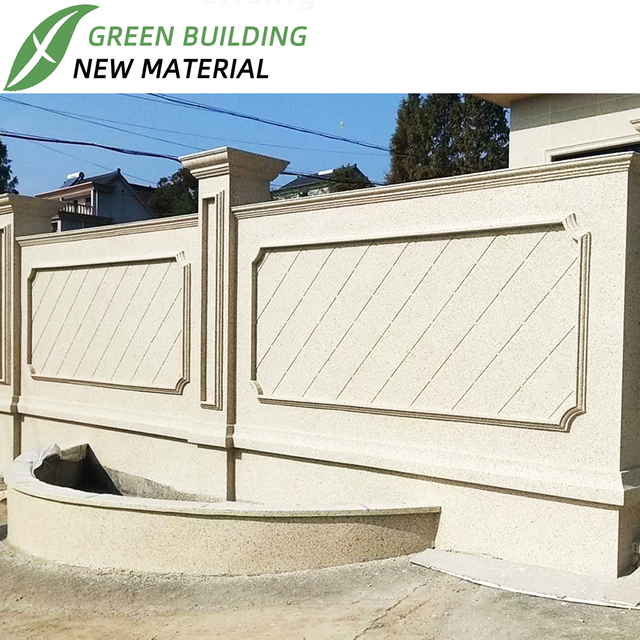
Exterior EPS mouldings present several advantages over traditional materials such as cement, plaster, and stone. One of the primary distinctions between these materials is their weight. Cement and stone elements add significant load to façades, which requires careful support and skilled installation. In contrast, EPS cornice moulding is lightweight, making it easier to handle and install. This reduction in weight also lowers the risk associated with façade work at height.
Installation complexity varies with the materials used. While cement and stone require high effort for proper installation, EPS moulding involves moderate effort. Its lightweight nature simplifies installation, reducing the overall effort required.
The structural impact also differs between EPS and traditional materials. Heavy decorative elements like cement and stone can influence wall anchors and substrates, potentially causing more stress. EPS mouldings, however, minimize these effects, and adapt well to insulated wall systems, offering a more flexible approach to structural integration.
In terms of façade adaptability, EPS mouldings excel, as they provide greater versatility compared to traditional materials, which have limited adaptability to different façades.
EPS cornice moulding often functions as part of a broader EPS-based building solution. Decorative profiles align with insulation layers and façade finishes. This relationship supports continuity across exterior systems. Designers can coordinate appearance and construction methods more easily. Integrated EPS systems rely on compatible processing and shaping methods. Decorative mouldings benefit from the same material handling logic used in insulation or formed components. This consistency helps maintain predictable results on site. It also simplifies coordination between design and construction teams. Manufacturers such as Jinhua Green Building Industry & Trading Co., Ltd. illustrate this integrated approach. Their scope includes EPS machinery and finished decorative components. This combination reflects how EPS cornice moulding fits within a complete EPS production and application framework.
EPS Cornice Moulding quality begins with material characteristics that influence strength and reliability. Density and internal cell structure affect how the profile resists compression and minor impact. A uniform cell pattern supports consistent edges and reduces weak points along long decorative runs. Material properties also influence insulation performance and behavior in exterior environments. EPS offers inherent thermal resistance, which helps limit temperature transfer at façade transitions. Weather exposure places stress on decorative elements, so stable material composition supports predictable performance over time.
Evaluation Aspect | What to Observe | Why It Matters |
Internal structure | Even texture, no visible voids | Supports consistent strength and clean edges |
Shape behavior | Stable form during handling | Reduces deformation after installation |
Surface hardness | Uniform feel across sections | Indicates consistent material quality |
Manufacturing accuracy determines how easily EPS Cornice Moulding integrates into architectural details. Precise cutting and moulding support clean joints at corners and straight runs. Poor dimensional control often leads to visible gaps after installation. Dimensional consistency also affects installation efficiency. Profiles with stable dimensions reduce on-site adjustment and waste. This becomes critical on large façades where alignment errors accumulate.
Key indicators of manufacturing precision include:
Straight profile edges without waviness
Consistent cross-section along the full length
Predictable corner alignment during dry fitting
Surface quality plays a central role in long-term appearance. Smoothness affects how coatings adhere and how light reflects across decorative lines. Irregular surfaces can exaggerate shadows and reveal defects after painting. Coating compatibility is another practical concern. A stable surface supports even paint absorption and reduces patchy results. Finish durability is closely tied to surface preparation quality.
Surface Factor | Practical Observation | Long-Term Impact |
Smoothness | No ridges or rough spots | Cleaner visual lines after painting |
Texture uniformity | Even surface across profiles | Reduces patchy coating appearance |
Edge finish | Clean edges after cutting | Minimizes joint visibility |
Exterior decorative elements face constant environmental stress. EPS Cornice Moulding must resist cracking and deformation caused by temperature variation and minor building movement. Material stability helps maintain profile shape over time. Structural stability refers to retaining form and alignment after installation. Excessive flexing or distortion can compromise façade consistency, even if the element remains intact.
Performance expectations focus on:
Shape retention after installation
Resistance to surface cracking under normal exposure
Consistent appearance across seasonal changes
The practicality of installation impacts both cost control and visual results. EPS Cornice Moulding is lightweight, making lifting and positioning during façade work easier. The reduced weight minimizes labor strain and enhances handling safety. Additionally, the fit and joint alignment significantly influence the final appearance of the installation. Profiles that cut cleanly allow for precise corner connections and straight runs, and the ease of cutting enables necessary adjustments without damaging the edges.
When comparing EPS Cornice Moulding to traditional materials, key differences include:
Weight handling: EPS is lightweight, while traditional materials are heavy.
Cutting on site: EPS profiles are simple and clean to cut, whereas traditional materials require limited or complex cutting.
Joint adjustment: EPS allows for flexible adjustments, while traditional materials offer restricted flexibility.
Labor efficiency: EPS requires higher efficiency, whereas traditional materials require lower labor efficiency.
Thermal behavior is an indirect but relevant factor. EPS Cornice Moulding contributes to continuity across insulated façades and helps avoid abrupt material transitions. Safety considerations focus on fire behavior and compliance expectations. Decorative EPS elements are typically treated as part of a broader façade system. Verification of fire-related treatment presence is part of responsible evaluation, without assuming specific ratings.
Key considerations include:
Compatibility with insulated wall systems
Awareness of fire safety requirements for exterior use
Alignment with local compliance expectations
Design compatibility begins with proportion. EPS Cornice Moulding should align with the overall façade scale rather than dominate it. Large buildings require profiles that remain readable from a distance, while smaller façades benefit from restrained projection and simpler geometry. When scale is mismatched, visual imbalance often occurs.
Modern architecture emphasizes clarity and order. Over-decorated profiles can introduce unnecessary visual noise, whereas clean lines support a contemporary design language. Simple EPS cornice moulding profiles help maintain façade rhythm and allow light and shadow to define form naturally.
When evaluating profile proportion, designers typically focus on building height and façade width, the relationship between cornice depth and the wall plane, and visual continuity across adjacent elevations. Balanced profile depth creates controlled shadow lines, minimal ornamentation contributes to a cleaner modern appearance, and consistent repetition across elevations helps establish a unified architectural language.
EPS Cornice Moulding performs optimally when integrated into the overall design of the exterior wall system. Its compatibility with rendered walls, insulation layers, and surface coatings ensures smooth transitions between materials. Poor coordination during installation can lead to visible breaks between materials, but an integrated design approach helps eliminate this issue. EPS cornice moulding is particularly well-suited for insulated wall assemblies due to its lightweight nature, which allows for decorative detailing without disrupting insulation layers. This helps maintain both the appearance and consistency of the wall envelope. Key integration considerations for EPS cornice moulding include alignment with render thickness, compatibility with exterior coatings, and continuity at wall and roof junctions. The moulding serves specific roles, such as providing clean termination lines on rendered surfaces, maintaining uninterrupted coverage on insulation layers, and supporting a uniform finish appearance on exterior coatings.
Exterior design often goes beyond roofline detailing, with supporting EPS moulding components contributing to the overall façade composition. Elements such as EPS Fence Trim, EPS Door Arc, and EPS Eave Cornice each serve distinct functional and visual roles. EPS Fence Trim helps define boundary lines and horizontal breaks, while EPS Door Arc frames openings and softens rigid geometry. EPS Eave Cornice emphasizes roof edges and protects visual transitions. Each of these elements enhances architectural clarity without adding structural complexity. To be effective, the use of these components depends on their coordinated placement, ensuring that they contribute to a harmonious and well-defined design.
EPS Cornice Moulding serves as the primary exterior line element that defines façade transitions. It creates a clear visual boundary at rooflines, parapets, and major horizontal breaks, aiding designers in organizing elevations without adding structural load. As a core component, EPS Cornice Moulding plays a vital role in the overall aesthetic of a building. Its continuous presence across façades ensures visual order and alignment, and when selected carefully, it helps maintain consistent proportions across different elevations. The key functional roles of EPS Cornice Moulding include defining roof and wall junctions, creating continuous horizontal emphasis, and concealing minor surface transitions. Additionally, the design of EPS Cornice Moulding contributes to line definition, visual rhythm, and transition control, helping to clarify architectural boundaries, support a consistent elevation layout, and smooth changes between planes.
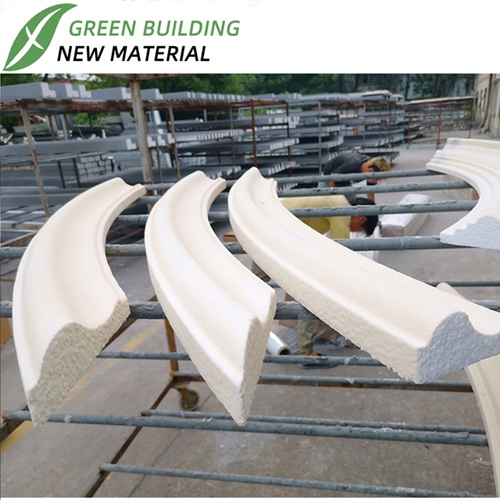
Architectural feature elements add a localized emphasis within façade compositions. EPS Key Stone is typically used at the apex of arches or openings, serving as a visual anchor for curved elements without adding heavy materials. It introduces a focal point that balances the design.
EPS Roman Column supports vertical articulation on façades, often applied to entrances or feature zones where vertical order is required. It complements the overall design by enhancing, rather than competing with, primary cornice lines.
Common uses include:
Key stones highlighting arched doors or windows
Roman columns framing entrances or feature bays
Controlled detailing that supports, but does not dominate, the façade
System consistency across EPS decorative products is crucial for both appearance and installation quality. When different moulding types share uniform material behavior, alignment becomes more predictable, reducing visible variation across façades. Consistent material quality also supports a uniform surface finish, as similar texture and absorption characteristics ensure coatings appear even across cornices, columns, and feature elements. Inconsistent materials, on the other hand, can reveal differences after painting, affecting the overall look. System consistency is important because it maintains visual coherence across elements, simplifies installation and alignment, and reduces finish variation across the façade.
EPS Cornice Moulding differs from cement-based decorative elements in structural behavior and installation demands. Cement components add significant weight to façades. This increases load on wall systems and anchors. EPS cornice moulding remains lightweight, which reduces structural impact and simplifies planning. Installation time also varies. Cement elements require curing, mechanical fixing, and careful handling. EPS cornice moulding allows faster positioning and adjustment on site. This improves workflow efficiency, especially on large façades. Façade compatibility is another key difference. EPS adapts well to insulated wall systems. Cement elements often require additional support layers. The table below outlines core distinctions.
Comparison Aspect | EPS Cornice Moulding | Cement-Based Elements |
Structural load | Low | High |
Installation time | Short | Long |
Façade compatibility | High with insulation | Limited flexibility |
On-site handling | Simple | Labor-intensive |
Traditional plaster mouldings rely on rigidity and mass to maintain their shape, while EPS Cornice Moulding depends on material stability and surface treatment. This distinction impacts durability and performance in exterior environments, especially concerning moisture resistance. Plaster absorbs moisture, making it prone to cracking and degradation over time. In contrast, EPS cornice moulding resists moisture absorption, providing better performance in varying weather conditions.
Maintenance requirements also differ. Plaster mouldings often require frequent inspection and repairs due to their tendency to absorb moisture. On the other hand, EPS mouldings generally need less ongoing attention when properly installed.
Key considerations include:
Moisture exposure risk: EPS is more resistant to moisture, while plaster is absorbent.
Surface cracking potential: EPS has a lower crack tendency compared to plaster, which is more prone to cracking.
Maintenance frequency: EPS requires reduced maintenance, while plaster demands ongoing care.
The selection of materials is influenced by performance requirements and project-specific conditions. EPS Cornice Moulding offers significant practical value, particularly in projects where weight, speed, and façade integration are key considerations. It is especially suitable for projects with insulated walls or renovation constraints.
Cost factors go beyond the initial material price. Installation time and labor effort are also important in determining the overall expense. EPS cornice moulding can often help reduce indirect costs by simplifying handling and speeding up installation.
EPS solutions are particularly effective when:
Maintaining a low structural load is a priority
Flexibility in façade systems is required
A consistent appearance across large areas is essential
Evaluating supplier capabilities begins with an understanding of how EPS Cornice Moulding is produced. Integrated EPS equipment and moulding expertise ensure stable shaping and repeatable results. When machinery and moulding processes align, profiles maintain consistent geometry and surface condition. Suppliers who develop both EPS machinery and decorative products can control more steps in the production chain, which helps reduce variability caused by outsourced processes. This integration also supports better coordination between material behavior and final profile design. Manufacturers like Jinhua Green Building Industry & Trading Co., Ltd. demonstrate how technical capability influences moulding consistency. Key indicators of capability include in-house control of shaping and cutting processes, familiarity with EPS material behavior during forming, and alignment between equipment design and decorative output.
The quality of EPS cornice moulding is significantly influenced by long-term production experience. This experience helps identify common process variations and reduce defects before the materials reach the installation site. It also improves predictability during installation, ensuring that quality control is maintained not just during final inspection, but throughout the entire production process.
A key benefit of experience is in material handling, forming accuracy, and storage practices, which are critical in maintaining consistency across EPS moulding batches. Suppliers with extensive EPS industry experience are better equipped to apply stable procedures at each stage of production. This experience ensures:
Consistent profile dimensions over time: Ensuring that the profiles remain accurate throughout different production runs, leading to fewer installation adjustments.
Reduced variation between production runs: This stability reduces the likelihood of defects and makes the process more predictable, making the overall installation smoother.
More predictable surface condition after delivery: The surface condition remains consistent and uniform, with cleaner joints and alignment, and an even finish after coating, improving the final appearance.
The context of the project plays a significant role in selecting the appropriate EPS Cornice Moulding. For residential exterior decoration, the focus is often on proportion and visual balance, with EPS Cornice Moulding providing controlled detailing without excessive projection. In commercial projects, the emphasis shifts to scale and repetition, with large façades requiring consistent profiles over long runs. EPS mouldings meet this need by offering lightweight handling and dimensional stability. Climate and design constraints further impact suitability, as exterior exposure, building height, and façade composition all affect performance expectations. By carefully matching the moulding selection to these conditions, long-term visual appeal and functionality can be enhanced. Key project factors to consider include the scale of the residential versus commercial façade, climate exposure, environmental stress, and the requirements for design simplicity or complexity.
High-quality EPS Cornice Moulding depends on material stability, precision, and surface consistency. These factors shape durability and visual clarity in modern architecture.
Informed choices in design and application reduce long-term exterior risks. They help maintain clean façades and consistent architectural lines.
Supported by experience, Jinhua Green Building Industry & Trading Co.,Ltd provides EPS solutions that align performance with modern decorative needs.
A: EPS Cornice Moulding is evaluated by material stability, dimensional consistency, and façade system compatibility.
A: EPS Cornice Moulding integrates well with insulation layers and minimizes added structural load.
A: EPS Cornice Moulding with low consistency can cause joint gaps, surface defects, and rework.
A: EPS Cornice Moulding reduces labor and maintenance effort through lightweight handling and stable performance.
A: EPS Cornice Moulding suits projects requiring faster installation and lower façade load constraints.