Views: 0 Author: Site Editor Publish Time: 2026-03-13 Origin: Site
Shaping foam might appear simple at first glance, yet the process behind professional foam manufacturing is surprisingly precise. A modern EPS Cutting Machine does not cut foam the way a saw cuts wood. Instead, it glides smoothly through the material using carefully controlled heat and movement. This method allows manufacturers to transform raw expanded polystyrene blocks into accurate shapes used in construction, packaging, decoration, and industrial design. Understanding how an EPS Cutting Machine works helps businesses evaluate production efficiency, improve cutting accuracy, and recognize which equipment features matter most in real manufacturing environments.
Unlike mechanical cutting tools, EPS foam cutting relies on thermal technology combined with controlled motion. Heated wires pass through foam blocks while guided by frames or computer-controlled systems. The result is smooth surfaces, consistent shapes, and high repeatability across large production runs. This simple principle forms the foundation of modern foam processing equipment used around the world.
The working principle behind foam cutting technology is straightforward. Heat softens and melts the foam material, while controlled movement determines the shape of the final product.
When an electrically heated wire contacts EPS foam, the material melts along the wire’s path. Because the wire is extremely thin and moves smoothly, it removes material without tearing the surrounding structure.
This approach produces clean cutting surfaces and allows foam to be shaped into detailed forms.
Mechanical blades often pull or tear foam beads during cutting. This can leave rough surfaces or uneven edges.
Hot wire foam cutting avoids that problem. Instead of tearing the foam apart, the heated wire gently melts the material at the contact point. The surrounding foam remains stable, which produces smooth edges and accurate profiles.
This clean cutting method is particularly important for decorative foam products or insulation panels that require precise dimensions.
A typical foam cutting system includes several key components. Understanding these components makes it easier to evaluate how different machines perform.
The cutting system usually consists of a thin metal wire stretched across a frame. Electricity passes through the wire, heating it to a controlled temperature.
The frame maintains stable tension in the wire to prevent vibration during cutting. Stable tension helps produce straight and accurate cutting lines.
The motion system moves either the foam block or the cutting wire along controlled paths. This movement determines the shape produced by the machine.
Modern machines use precision rails and electric motors to guide motion. The smoother the movement, the more accurate the final foam shape becomes.
Control systems determine how cutting paths are generated and executed.
Some machines use manual adjustment for simple cutting tasks, while more advanced equipment uses CNC control systems that follow digital design files.
CNC control allows manufacturers to produce identical shapes repeatedly, which is essential for decorative foam production, packaging inserts, and architectural profiles.
To better understand how foam cutting systems operate in real production, it helps to look at the typical workflow.
The process begins with a design or measurement. For simple shapes, operators may use physical templates.
For more complex designs, a digital drawing or CNC file defines the cutting path.
The design stage ensures the final foam shape matches the intended dimensions.
Before cutting begins, the operator adjusts several key parameters.
Wire tension must be stable so the wire remains straight. Wire temperature must also be calibrated to match the density of the foam being cut.
The foam block is then positioned securely on the cutting platform.
Proper setup ensures consistent cutting quality throughout the production run.
Once the machine begins operating, the heated wire moves along the programmed path.
The cutting speed must remain balanced with the wire temperature. If the machine moves too quickly, the wire may drag through the foam. If it moves too slowly, the foam may melt excessively.
Maintaining the correct balance produces smooth surfaces and accurate shapes.
After cutting is complete, the foam pieces are inspected.
Edges are checked for smoothness, and dimensions are verified. If the foam is part of a decorative product or construction component, it may then proceed to additional processes such as coating, assembly, or finishing.
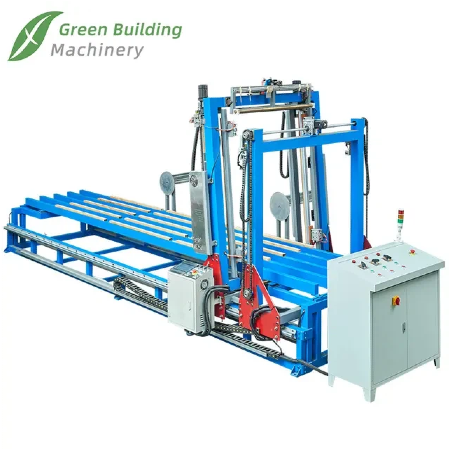
Although foam cutting appears simple, several technical factors determine the final quality of the cut.
Temperature and speed must remain balanced. If the wire temperature is too high, foam edges may melt excessively and lose sharp detail.
If the wire temperature is too low, the wire may drag through the foam and leave rough lines.
Proper calibration ensures the cutting process remains stable.
Wire tension plays an important role in maintaining straight cutting paths.
If the wire becomes loose, it may vibrate during cutting. This vibration creates wavy edges and inconsistent shapes.
Stable wire tension keeps the cutting line precise.
The structure of the machine itself also affects cutting quality.
Rigid frames and stable motion systems prevent vibration during cutting. This stability allows machines to maintain accuracy even when cutting large foam blocks or long decorative profiles.
Different foam cutting machines provide different levels of automation.
Manual cutting systems depend heavily on operator skill. While they can handle simple shapes, repeating identical designs across large batches becomes difficult.
CNC cutting systems solve this problem by following programmed paths. Once the design is entered, the machine can reproduce the same shape consistently.
Automation reduces dependence on manual craftsmanship. Operators primarily supervise the machine and ensure the cutting process runs smoothly.
This allows manufacturers to maintain stable production even as order volumes increase.
Automated machines can run continuously, producing multiple foam pieces in a single operation.
This increased throughput helps manufacturers handle larger orders while maintaining consistent product quality.
Even experienced operators occasionally encounter cutting problems. Recognizing the cause of these issues allows them to correct the process quickly.
Wavy edges often indicate unstable wire tension or vibration in the machine frame.
Mismatched symmetry usually points to motion calibration problems within the control system.
Rough cutting surfaces often result from incorrect combinations of wire temperature and cutting speed.
Understanding these signs helps operators maintain stable production conditions.
Symptom | Likely Cause | Quick Check | Practical Adjustment | When to Upgrade |
Wavy cutting edges | Loose wire tension | Inspect wire frame stability | Tighten wire tension | Consider stronger frame design |
Melted corners | Wire temperature too high | Observe foam melting during cut | Reduce heating current | Upgrade temperature control system |
Rough surface | Cutting speed too fast | Check machine movement speed | Slow down cutting pass | Upgrade motion control |
Size deviation | CNC calibration error | Compare output with design file | Recalibrate system | Upgrade precision CNC control |
Tables like this help production teams quickly diagnose problems and maintain consistent foam cutting performance.
Modern foam manufacturing often integrates multiple processes beyond simple cutting. Equipment development now includes recycling systems, molding machines, and advanced CNC cutting solutions that work together to improve efficiency.
Green building Machinery focuses on equipment used in the cutting, recycling, and molding of EPS foam. The company has developed a wide range of machines including EPS melting machines, pelletizers, foam crushing and recycling equipment, and both 2D and 3D CNC cutting systems.
These machines support sustainable foam processing by reducing waste and enabling more efficient material use. Recycling technology allows leftover foam to be reused rather than discarded, helping manufacturers reduce environmental impact.
In addition to machinery manufacturing, the company also operates foam carving and cornice molding production lines. With years of experience producing decorative foam building materials and specialized plaster formulas, the production processes have achieved high standards in exterior architectural decoration.
Products created using these technologies are exported to markets across Europe, North America, and Australia. This global presence reflects the growing demand for advanced foam processing equipment.
Understanding how an EPS Cutting Machine works makes it easier to see why the technology has become essential in modern foam manufacturing. By combining controlled heat, precise motion systems, and reliable machine structures, manufacturers can achieve accurate shapes, smooth surfaces, and consistent production results. The key variables remain simple: temperature, cutting speed, and machine stability. When these factors are balanced correctly, foam cutting becomes efficient and highly repeatable. Businesses that adopt advanced equipment gain better control over product quality and production output through a reliable foam cutting system.
If your production requires precise foam shaping or large-scale EPS processing, our team is ready to help. Green building Machinery provides a wide range of EPS foam processing equipment including CNC cutting machines, flat wire cutting machines, and recycling systems. Contact us today to learn how our foam cutting technology can improve your manufacturing efficiency and support your production goals.
An EPS Cutting Machine uses heated wire technology to melt foam along a controlled cutting path. Motion systems guide the wire through the foam to produce accurate shapes.
Hot wire cutting produces smoother surfaces because it melts the foam rather than tearing it. This results in cleaner edges and better dimensional accuracy.
Yes. CNC control systems follow programmed designs precisely, allowing manufacturers to reproduce identical shapes repeatedly with minimal variation.
The most important factors include wire temperature, cutting speed, wire tension stability, and the rigidity of the machine structure. Maintaining balance among these factors ensures consistent cutting results.